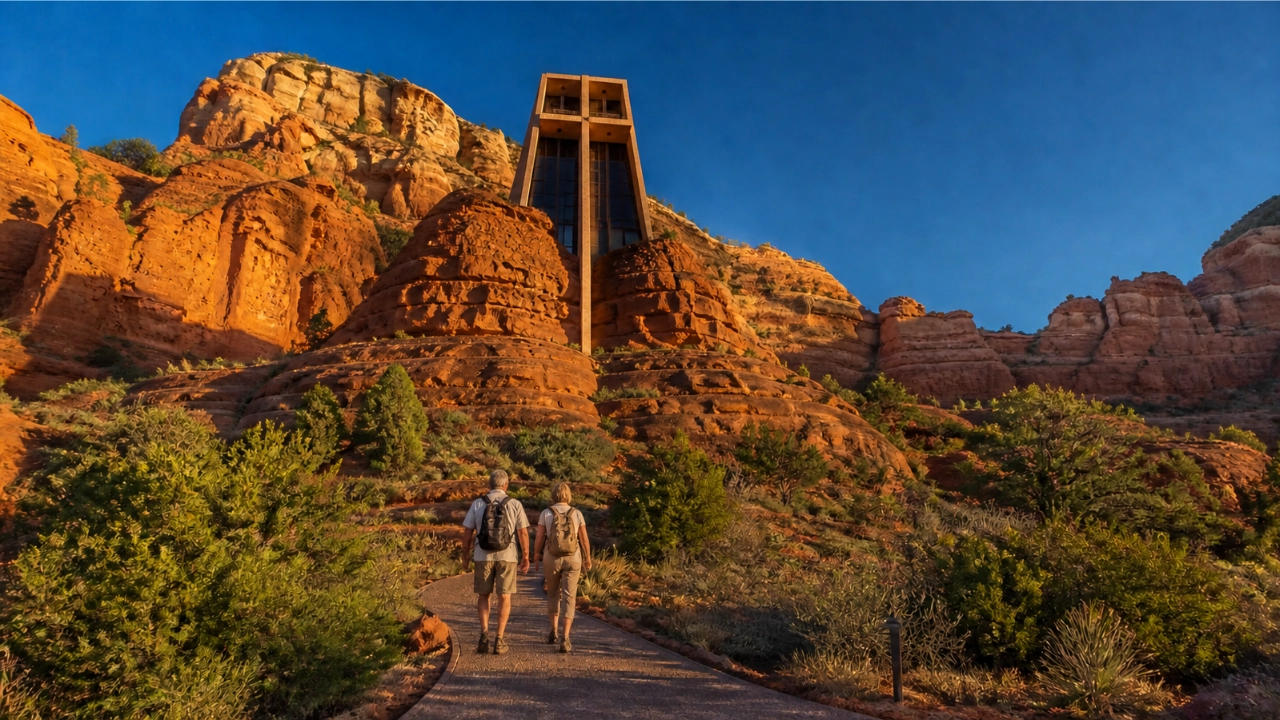
Sedona can be a rewarding trip for travelers over 50 even when long hikes are not part of the plan. You might enjoy a roadside view, a slow lunch, or a short walk, while someone else in your group prefers a longer outing. Different comfort levels can fit the same visit when activities stay flexible.https://travelminx.com/palermo-itinerary-travelers-over-50/ A vortex is a place that some visitors associate with spiritual energy, a belief that is personal rather than a scientific designation. Scenic stops and optional activities give you plenty of ways to experience the area without treating each day like a challenge. A little planning can help you make room for both memorable views and quiet moments, whatever your interests or energy. Edit Full screen View original Delete Sedona for travelers over 50 Key Takeaways A well-paced visit does not depend on seeing every landmark. Pick a pace that leaves room for rests and unplanned time. What Is the Best Time to Visit Sedona for Travelers Over 50? For mild daytime exploring, October’s listed 77°F high and 48°F low make layers a sensible choice. Spring and fall suit many visitors who want comfortable time outdoors, while winter temperatures average around 60°F. Choose a season for comfort, then shape outings around the amount of walking and rest you prefer. Sedona welcomes about 3 million people each year, so popular areas can feel busy. Spring-break crowds fall mostly in March and affect parking and trails. Reaching popular trailheads by 7 a.m. can help you avoid some of that pressure, though an early start may not suit every group. For a popular trailhead during spring break, aim to arrive by 7 a.m. if an early start works for you. Choose a season for comfort, not just scenery October’s wide temperature range means a cool morning can turn into a warm afternoon. Bring layers that are easy to remove, especially if your day includes both a scenic drive and time outside. Winter can still offer pleasant daytime exploring, but check the day’s conditions before choosing an outing. Spring and fall are practical choices when you want a mix of town visits and outdoor stops. Your preferred season may also depend on whether you enjoy a brisk morning or would rather take a slower start. Either way, one main outing is often easier to enjoy than a packed schedule. Plan around crowds and sunset Traffic builds around popular places when many visitors arrive at similar times. On a day when you want to sleep in, choose a town visit or another flexible activity rather than rushing to a trailhead. That gives you more freedom to stop for lunch or rest when you need it. The Sedona Airport Scenic Overlook recommends arriving 1 hour before published sunset to avoid traffic. That timing gives you a better chance to reach the overlook before the last-minute rush. If sunset is the goal at the airport overlook, arrive an hour before the published time rather than joining the last-minute traffic. Where Should You Stay, and Do You Need a Car? A car gives you the greatest control over stop length and location, while local rides work best when their operating days match your plans. Choose your base around the places you most want to visit and the kind of day you prefer. A car makes it easier to adjust your schedule on the spot. Sedona Shuttle and Sedona Connect can suit you when their schedules and service areas fit your plans. The Shuttle’s trailhead routes operate Thursday through Sunday year-round without reservations. During spring break and some holidays, the Shuttle runs daily. A car offers the most control over the day Driving gives you the flexibility to linger at a viewpoint, stop for a meal, or return to your lodging when you feel ready. That control can be useful when your group has different interests or energy levels. It also makes a less structured day easier to arrange. Public transportation is a practical option when your plans stay close to the routes and service areas. Trailhead service is not a promise of transport to every attraction, so do not assume a shuttle will reach every stop on your list. Check the destination before making it the center of your day. Match public transportation to its schedule Sedona Connect is an on-demand ride service that runs Thursday through Sunday, from 6:30 a.m. to 8:30 p.m. Its hours can cover many daytime outings, but you will need a different plan outside that window. Match the day’s activities to the times the service runs. Service Operating days Hours or seasonal schedule Reservation requirement Sedona Shuttle trailhead routes Thursday through Sunday year-round Year-round service No reservations required Sedona Shuttle during spring break or some holidays Daily during spring break and some holidays Daily during spring break and some holidays No reservations required Sedona Connect Thursday through Sunday 6:30 a.m. to 8:30 p.m. On-demand service For a lodging base, weigh what you want nearby against how much you plan to drive. A convenient location can make a midday break simpler, while a car gives you more choice about where to spend the afternoon. Check each day’s service area and hours before building an outing around a ride. Edit Delete Which Sedona Views Are Worth the Short Walk? Some of Sedona’s best-known red-rock views appear close to roads and established stopping points. Bell Rock, Cathedral Rock, Courthouse Vista, and the Chapel of the Holy Cross are recognizable scenic stops. A brief visit can be enough to take in the setting, even if you do not want a longer walk. Sedona’s red rock formations took about 350 million years to form. Their scale and color make a short stop feel worthwhile, but each location has a different approach. Do not assume every viewpoint has level ground or a barrier-free route. […]
Sedona can be a rewarding trip for travelers over 50 even when long hikes are not part of the plan. You might enjoy a roadside view, a slow lunch, or a short walk, while someone else in your group prefers a longer outing. Different comfort levels can fit the same visit when activities stay flexible.https://travelminx.com/palermo-itinerary-travelers-over-50/
A vortex is a place that some visitors associate with spiritual energy, a belief that is personal rather than a scientific designation. Scenic stops and optional activities give you plenty of ways to experience the area without treating each day like a challenge. A little planning can help you make room for both memorable views and quiet moments, whatever your interests or energy.

Edit
Full screen
Delete
Sedona for travelers over 50
Key Takeaways
- Choose outings that fit your comfort and energy.
- Build rest and flexible time into each day.
- A car offers the most control over sightseeing stops.
- Local rides can work when their schedules match your plans.
- Short walks, galleries, creekside breaks, and tours all offer ways to enjoy the area.
- Set one main activity for each day, then leave the rest open.
A well-paced visit does not depend on seeing every landmark. Pick a pace that leaves room for rests and unplanned time.
What Is the Best Time to Visit Sedona for Travelers Over 50?
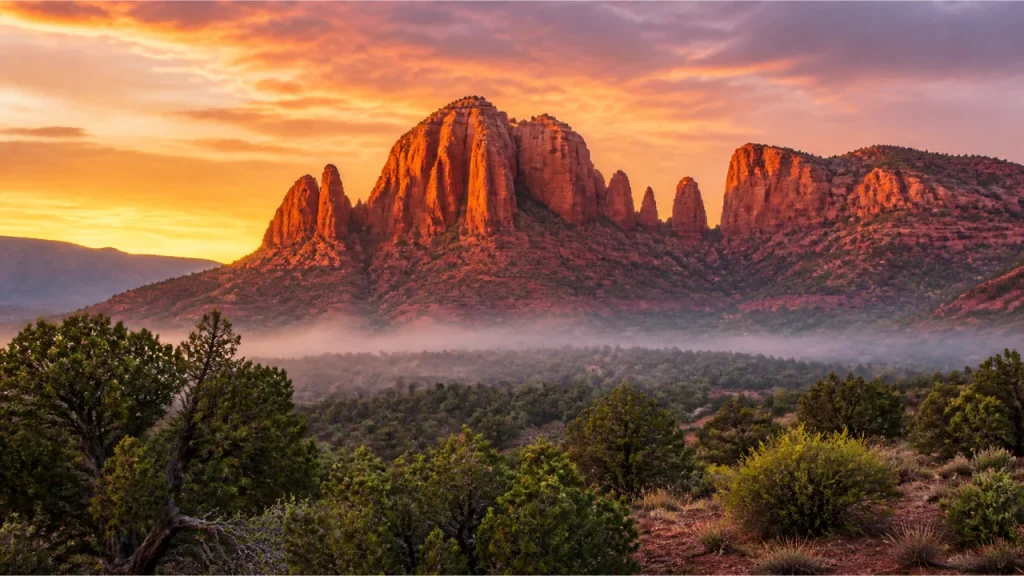
For mild daytime exploring, October’s listed 77°F high and 48°F low make layers a sensible choice. Spring and fall suit many visitors who want comfortable time outdoors, while winter temperatures average around 60°F. Choose a season for comfort, then shape outings around the amount of walking and rest you prefer.
Sedona welcomes about 3 million people each year, so popular areas can feel busy. Spring-break crowds fall mostly in March and affect parking and trails. Reaching popular trailheads by 7 a.m. can help you avoid some of that pressure, though an early start may not suit every group.
For a popular trailhead during spring break, aim to arrive by 7 a.m. if an early start works for you.
Choose a season for comfort, not just scenery
October’s wide temperature range means a cool morning can turn into a warm afternoon. Bring layers that are easy to remove, especially if your day includes both a scenic drive and time outside. Winter can still offer pleasant daytime exploring, but check the day’s conditions before choosing an outing.
Spring and fall are practical choices when you want a mix of town visits and outdoor stops. Your preferred season may also depend on whether you enjoy a brisk morning or would rather take a slower start. Either way, one main outing is often easier to enjoy than a packed schedule.
Plan around crowds and sunset
Traffic builds around popular places when many visitors arrive at similar times. On a day when you want to sleep in, choose a town visit or another flexible activity rather than rushing to a trailhead. That gives you more freedom to stop for lunch or rest when you need it.
The Sedona Airport Scenic Overlook recommends arriving 1 hour before published sunset to avoid traffic. That timing gives you a better chance to reach the overlook before the last-minute rush. If sunset is the goal at the airport overlook, arrive an hour before the published time rather than joining the last-minute traffic.
Where Should You Stay, and Do You Need a Car?
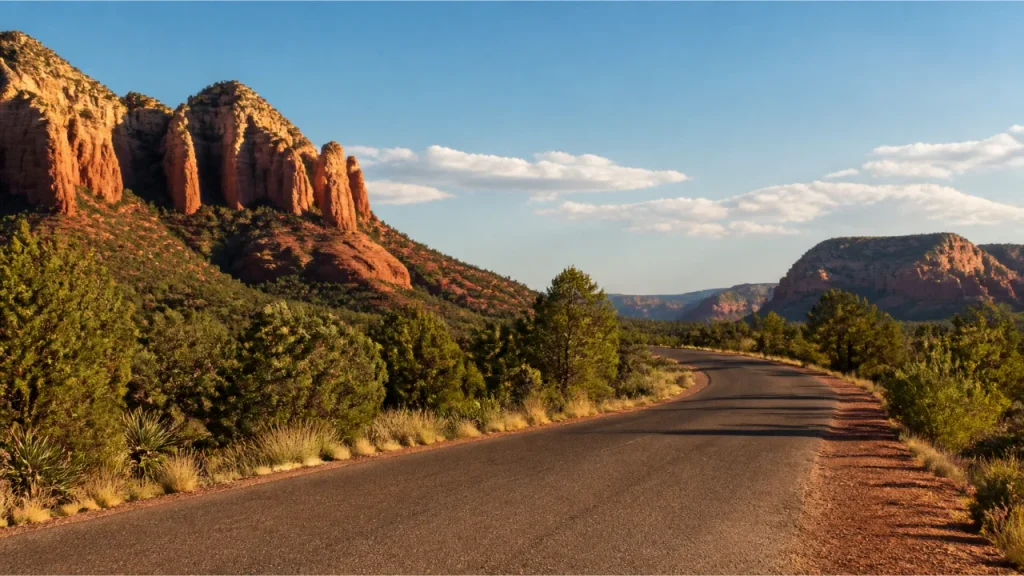
A car gives you the greatest control over stop length and location, while local rides work best when their operating days match your plans. Choose your base around the places you most want to visit and the kind of day you prefer. A car makes it easier to adjust your schedule on the spot.
Sedona Shuttle and Sedona Connect can suit you when their schedules and service areas fit your plans. The Shuttle’s trailhead routes operate Thursday through Sunday year-round without reservations. During spring break and some holidays, the Shuttle runs daily.
A car offers the most control over the day
Driving gives you the flexibility to linger at a viewpoint, stop for a meal, or return to your lodging when you feel ready. That control can be useful when your group has different interests or energy levels. It also makes a less structured day easier to arrange.
Public transportation is a practical option when your plans stay close to the routes and service areas. Trailhead service is not a promise of transport to every attraction, so do not assume a shuttle will reach every stop on your list. Check the destination before making it the center of your day.
Match public transportation to its schedule
Sedona Connect is an on-demand ride service that runs Thursday through Sunday, from 6:30 a.m. to 8:30 p.m. Its hours can cover many daytime outings, but you will need a different plan outside that window. Match the day’s activities to the times the service runs.
| Service | Operating days | Hours or seasonal schedule | Reservation requirement |
| Sedona Shuttle trailhead routes | Thursday through Sunday year-round | Year-round service | No reservations required |
| Sedona Shuttle during spring break or some holidays | Daily during spring break and some holidays | Daily during spring break and some holidays | No reservations required |
| Sedona Connect | Thursday through Sunday | 6:30 a.m. to 8:30 p.m. | On-demand service |
For a lodging base, weigh what you want nearby against how much you plan to drive. A convenient location can make a midday break simpler, while a car gives you more choice about where to spend the afternoon. Check each day’s service area and hours before building an outing around a ride.
Edit
Delete
Which Sedona Views Are Worth the Short Walk?
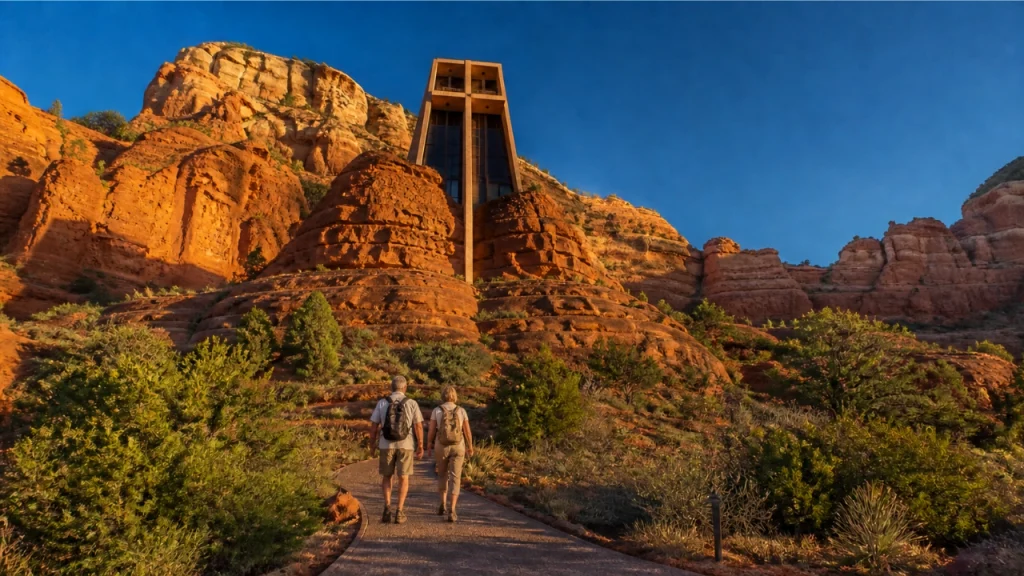
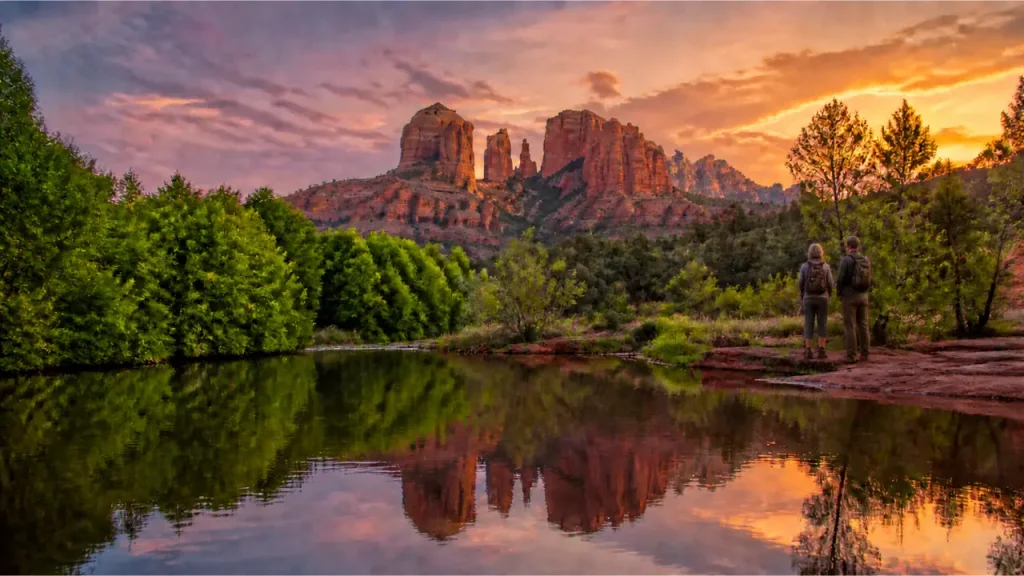
Some of Sedona’s best-known red-rock views appear close to roads and established stopping points. Bell Rock, Cathedral Rock, Courthouse Vista, and the Chapel of the Holy Cross are recognizable scenic stops. A brief visit can be enough to take in the setting, even if you do not want a longer walk.
Sedona’s red rock formations took about 350 million years to form. Their scale and color make a short stop feel worthwhile, but each location has a different approach. Do not assume every viewpoint has level ground or a barrier-free route.
- Bell Rock offers a distinctive landmark view near the road.
- Cathedral Rock gives you a close look at a dramatic red-rock formation.
- Courthouse Vista provides a stopping point for views of the surrounding formations.
- The Chapel of the Holy Cross pairs architecture with a striking red-rock setting.
These stops can work well for a group with different walking preferences. One person can take a brief stroll while another stays near the vehicle or rests at the stopping point. Agree on a meeting place before separating, especially if the approach is uneven.
The Chapel of the Holy Cross is a memorable choice when you want architecture as well as scenery. Courthouse Vista and Bell Rock can suit a quick roadside pause, while Cathedral Rock may become the focus of a longer visit. Your preferred view may depend on how much walking feels comfortable that day.
Scenic drives can connect several landmark areas, but a string of stops may leave little time to enjoy any one of them. A quieter visit gives you a chance to notice the changing light and shapes in the red rock. Choose one viewpoint as the main photo stop instead of trying to fit every landmark into a single afternoon.
Which Trails Work for Different Mobility Levels?
The best route is the one whose surface and turnaround point match your comfort, not the one with the most famous name. Compare distance, grade, and surface before setting out. Conditions can change along a path, so decide in advance how far you want to go.
A trail’s accessibility rating does not guarantee a suitable route for every mobility aid. The Sedona View Trail connecting the Airport Scenic Overlook parking lot and the Vortex parking lot is 0.7 miles and rated moderate. The trail is paved, has benches, and is rated highly for wheelchair accessibility.
Read accessibility ratings as a starting point
Ratings can help you compare trails, but your needs and equipment matter too. A paved route with benches may feel different from packed dirt or gravel, even when the stated rating looks favorable. Think about whether you want a short outing, a longer route, or a path with a clear place to turn back.
The table separates the stated distance and surface details from each route’s accessibility information. It does not imply that every segment is equally comfortable. Trail conditions and your own energy can shape where you choose to stop.
Compare surfaces and shorter route options
| Trail | Distance or segment | Surface or grade | Accessibility detail |
| Sedona View Trail | 0.7 miles | Paved, with benches | Rated highly for wheelchair accessibility; trail rated moderate |
| Bell Rock Pathway | 3.6 miles; shorter segments available | Starts wide and relatively flat | Moderate wheelchair-accessibility rating |
| Courthouse Butte Loop Trail | First 1-2 miles | Packed dirt and gravel; rougher farther along | Accessible parking for the first 1-2 miles |
| Kisva Trail | 0.5 miles | Paved and gently graded | Rated highly for wheelchair accessibility |
The Bell Rock Pathway starts wide and relatively flat, and shorter segments let you set your own turnaround point. Its moderate wheelchair-accessibility rating is useful context, not a promise that every setup will work. Treat the full 3.6 miles as an option, not a required goal.
Red Rock State Park’s Kisva Trail is paved, gently graded, and 0.5 miles long. The Sedona View Trail also has benches along its paved surface. If you want a route where resting spots matter, those details may help guide your choice.
Know where the Courthouse Butte route gets rougher
The first 1-2 miles of Courthouse Butte Loop Trail have accessible parking and packed dirt and gravel. The terrain gets rougher farther along, so the start of the route does not describe the whole loop. The Airport Loop Trail is a separate 3.2-mile moderate loop, and dogs may use it on leash.
Ask yourself where you can comfortably turn around before leaving the trailhead. A route that allows an early return may be a better fit than a longer loop with changing ground. For a first outing, choose a short segment with an easy place to turn back.

Edit
Full screen
Delete
Bell Rock Pathway begins wide and relatively flat
Which Guided Tours Suit a Lower-Energy Day?
A guided outing can take care of navigation, but the ride itself should match your tolerance for bumps and early starts. Ask about the whole experience, including the time in the vehicle and any walking at stops. A lower-energy day can still include a memorable view.
Jeep tours range from relatively tranquil rides to rough four-wheel routes. A tour name alone does not tell you how much the ride will jostle you. Ask how passengers get in and out, how long the trip lasts, and whether the route includes walking.
- Jeep tours let you see red-rock scenery from a vehicle, with ride roughness varying by route.
- Sunrise hot-air-balloon flights offer an aerial experience, with an early start.
- Self-guided scenic drives let you set your own pace and decide how long to stop.
A Jeep ride can work for you if the route’s bumps and boarding process feel manageable. Some trips use rough four-wheel routes, while others are relatively tranquil. Ask about those differences before choosing a tour, and be clear about what kind of ride you prefer.
A hot-air-balloon flight is a very different outing. Flights take place at sunrise, so the early departure may matter more than the walking. You will also want to ask about getting into and out of the basket, the time commitment, and the operator’s weather and cancellation policies.
A self-guided drive can be a good choice when you want to keep the day flexible. You can pause at scenic stops, shorten the outing, or head back when you have had enough. It gives you ground-level views without committing to a guided route or a specific walking plan.
Each option has its own balance of time, movement, and scenery. Match that balance to the people in your group rather than choosing by the most dramatic description. Before booking, ask how rough the route is and how much walking is involved at each stop.
What Can You Do in Sedona Without Hiking?
A relaxed Sedona day can revolve around galleries, food, and creekside scenery instead of a hike. Give each stop time, rather than setting a mileage goal. You can choose a small outing and still enjoy the red rocks and the character of town.
Uptown Sedona has boutiques, galleries, cafes, and restaurants. Browse at your own pace, stop for a meal, or choose a coffee break between shops. That mix makes it easy for people in a group to spend the day together without needing the same activity.
- Browse galleries and cafes in Uptown Sedona.
- Visit Tlaquepaque Arts and Crafts Village along Oak Creek.
- Take a picnic break by Oak Creek.
- Look for bird walks or wildlife-viewing opportunities at Red Rock State Park.
Tlaquepaque Arts and Crafts Village brings shops and creekside surroundings together. Its cobblestone paths can be uneven, and outdoor surfaces elsewhere may also vary underfoot. Allow time to pause or choose a shorter route through the village.
A picnic beside Oak Creek gives you a reason to slow down and enjoy the setting. You can make the meal the main event rather than a quick stop between attractions. Consider the ground and seating options when deciding where to settle in.
Red Rock State Park is a 286-acre nature preserve with bird walks and wildlife-viewing opportunities. You can enjoy those activities without making a hike the goal of the day. The preserve offers a quieter change of pace from the shops and cafes in town.
These outings suit different interests, from browsing to watching for birds. A slower pace also gives your group time to rest, talk, and stay longer where it feels comfortable. Leave time to sit and enjoy the setting rather than treating every stop as a quick photo opportunity.

Edit
Full screen
Delete
Tlaquepaque cobblestone paths beside Oak Creek
How Many Days Should You Plan in Sedona?
Two full days are enough to give a first visit a relaxed shape without trying to see every attraction. Plan one main activity at a time, with an unhurried meal and room to rest. Three or four days work better if you want a slower pace or a regional day trip.
For a first visit focused on Sedona’s main views and town, plan two full days. A morning viewpoint can anchor one day, followed by lunch and an afternoon break. A second activity can stay optional, so a longer rest does not make the day feel unfinished.
Two full days for a first visit
On the first morning, choose one scenic stop as your anchor. Keep the walk optional and let the group decide how much time to spend outside. Then leave space for an unhurried meal and an afternoon rest back at your lodging.
Use the second day for a different kind of outing, such as browsing town or taking a self-guided drive. A morning activity can be followed by lunch, quiet time, and one optional stop later. If the group has more energy, use the open block; if not, keep the rest.
Three or four days for a slower pace
Three or four days give you more breathing room between outings. You can keep one morning free, then add a regional day trip without squeezing the main Sedona experience into a tight schedule. An extra day can also make space for a slow meal or an unplanned stop.
Spread activity across the visit rather than using every morning and afternoon. For example, set one morning aside for a view, take a long lunch, and leave the afternoon open. Add a second activity only if everyone still wants one.
A longer stay is especially useful when your group prefers different levels of activity. One person can browse town while another chooses an optional walk, then you can meet for a meal. Keep one block of open time in the itinerary so a slow meal or extra rest does not derail the day.
What Should You Budget for Parking and Public-Land Access?
First check whether your stop is a National Forest recreation site or the separately managed airport scenic overlook. The fee depends on the location, not simply on whether you are in red rock country. A Red Rock Pass or an eligible interagency pass covers recreation on National Forest land.
A Red Rock Pass is required for vehicle access to 19 designated Red Rock Ranger District day-use sites. Those sites include Bell Rock Pathway/Vista, Cathedral Rock, Doe Mountain, and Fay Canyon Trailhead. An America the Beautiful Interagency Pass, Golden Age Pass, or Golden Access Pass can also meet the recreation requirement.
| Pass | Cost | Duration or coverage | Where it applies |
| Red Rock Pass daily | $5 | Daily | National Forest recreation sites in Red Rock Country |
| Red Rock Pass weekly | $15 | Weekly | National Forest recreation sites in Red Rock Country |
| Red Rock Pass annual | $20 | Annual | National Forest recreation sites in Red Rock Country |
| Coconino Annual Pass | $50 | Annual | Crescent Moon Ranch, Grasshopper Point, Call of the Canyon/Westfork Trailhead, Beaver Creek, and Lower Lake Mary |
The Red Rock Pass is sold at fee-machine kiosks at sites that require one, by the Sedona Chamber of Commerce, and at the Red Rock Visitor Center. The visitor center sells daily and weekly passes. A Red Rock Pass costs $5 daily, $15 weekly, or $20 annually.
An incidental scenic stop of approximately 15 minutes or less does not require a pass. That exception applies to a brief stop, not a visit planned around recreation on National Forest land. If you expect to spend time at a designated site, sort out the appropriate pass before setting out.
The Sedona Airport Scenic Overlook has a separate parking charge of $3 per vehicle for the day. The receipt allows you to leave and return that same day, but overnight parking is not allowed. Do not treat this fee as a Red Rock Pass or as payment for a National Forest site.
The different pass names can be easy to mix up when several stops are on your schedule. Check the location of each planned outing, then match it to the listed pass or fee. Keep the airport-overlook receipt in the vehicle if you expect to leave and return that day.
Which Day Trips Pair Well With a Sedona Stay?
The Grand Canyon is the biggest commitment of these options, at about two hours each way from Sedona. Plan it as a full-day outing, with enough time for the drive and a visit. Williams offers a Route 66 stop on the return if you want to add another pause.
Oak Creek Canyon takes about an hour to drive on Route 89A between Sedona and Flagstaff, with a descent of more than 2,500 feet. Its switchbacks and elevation change make the drive a poor fit for anyone in your vehicle who feels uneasy with that kind of road.
Make the Grand Canyon a full-day outing
The Grand Canyon is a substantial drive, so it can take up most of your day. Decide whether the long outing suits your group before adding other plans around it. Williams can make a pleasant stop on the return, especially if you want a Route 66 break.
A guided tour may help if you would rather leave the driving to someone else. The same basic question applies either way: will everyone enjoy spending much of the day on the road? Keep the following morning flexible if the long day calls for extra rest.
Ride the Verde Canyon Railroad
The Verde Canyon Railroad offers a rail outing with ticket options that differ by trip and passenger age. In 2026, standard tickets cost $139 per passenger age 1 and over; infants under 1 ride free on an adult’s lap. That is the standard ticket, not the price for every special event.
A 2026 caboose charter costs $1,200 for a party of six adults or fewer, with passengers age 13 and over. The Christmas Eve Magical Christmas Journey is a separate 2026 trip, costing $70 for adults and $50 for children ages 2-10. Infants under 1 ride free on an adult’s lap for that journey.
See Oak Creek Canyon at a measured pace
The Oak Creek Canyon drive links Sedona and Flagstaff along Route 89A. Its roughly one-hour drive includes a descent of more than 2,500 feet, so the road may feel demanding for some passengers. You can choose a different outing if the elevation change or switchbacks would distract from the views.
The canyon drive can be appealing when your group feels comfortable with winding roads. There is no need to include it just because it is nearby; a quieter day in Sedona may suit you better. Choose the canyon drive only if its switchbacks and elevation change feel comfortable for everyone in the vehicle.
Choose the canyon drive only if its switchbacks and elevation change feel comfortable for everyone in the vehicle.
Conclusion
Sedona is easiest to enjoy when the plan leaves room for both scenery and rest. You do not need to measure the visit by how many trails or landmarks you fit into a day. A comfortable pace can make space for views, good meals, and time together.
Choose activities that fit the people traveling with you, and keep optional walks truly optional. A clear plan for transportation and one main stop each day can make the rest of the schedule feel less demanding. Let your interests and energy guide what you add.
Choose your dates and mark one comfortable anchor activity for each day before filling in the rest.
FAQ
Is Sedona a good choice for a multigenerational trip?
Yes, Sedona can work well for a multigenerational trip when walks are optional and everyone agrees on a shared meeting point. Each person can choose an activity that feels comfortable, then meet the group for a meal or another relaxed stop. A plan with flexible timing helps children, adults, and older relatives enjoy the day without keeping the same pace.
What should I bring for a day out in Sedona in October?
Bring layers for October’s listed 77°F high and 48°F low, along with sun protection and water for time outdoors. The morning and afternoon can feel quite different, so a light layer you can remove is useful. Comfortable footwear also helps when you stop at places with uneven outdoor surfaces, even if you do not plan a long walk.
Can I bring my dog on Sedona trails?
Dogs may use the Airport Loop Trail on leash, but check the rules for each other trail before setting out. A leash keeps your dog with you on that route, while a separate trail may have different requirements. Bring water for your dog and consider the length and surface of the outing before deciding whether it will be comfortable.
Can you visit Sedona in winter without hiking?
Yes, you can visit Sedona in winter without hiking by focusing on viewpoints, town attractions, and other low-walking activities. Galleries, cafes, scenic stops, and creekside breaks offer ways to spend time outdoors or indoors without setting a trail goal. Check the conditions for your specific day, then choose activities that feel manageable for your group.
Is Oak Creek Canyon a good drive for someone who dislikes heights?
Oak Creek Canyon may not be a comfortable drive for someone who dislikes heights, since Route 89A has switchbacks and descends more than 2,500 feet. The drive between Sedona and Flagstaff takes about an hour, so passengers spend a meaningful stretch on the winding road. Choose another outing if the elevation change would make the ride stressful.
How far ahead should I reserve a sunrise balloon flight?
Reserve a sunrise balloon flight as early as practical for your dates, especially during busy travel periods, and confirm the operator’s weather and cancellation policies. Flights are sunrise outings, so factor the early start into your plans as well as the reservation. Ask what happens if weather prevents a flight, and make sure the booking terms fit your scheduletravelminx.com.