Find the Hidden Face in a Vintage Park Illustration
Can You Find the Hidden Face in This Vintage Park Picture?
A quiet walk through the park seems like an unlikely setting for a mystery. Yet this old-fashioned illustration invites you to search for something beyond its everyday scene.
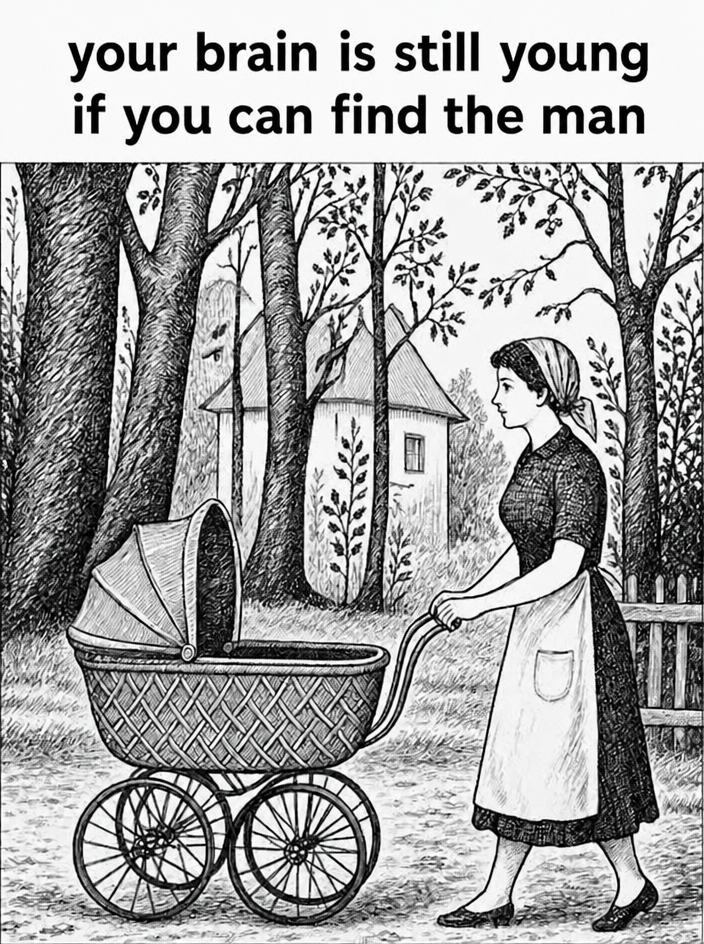
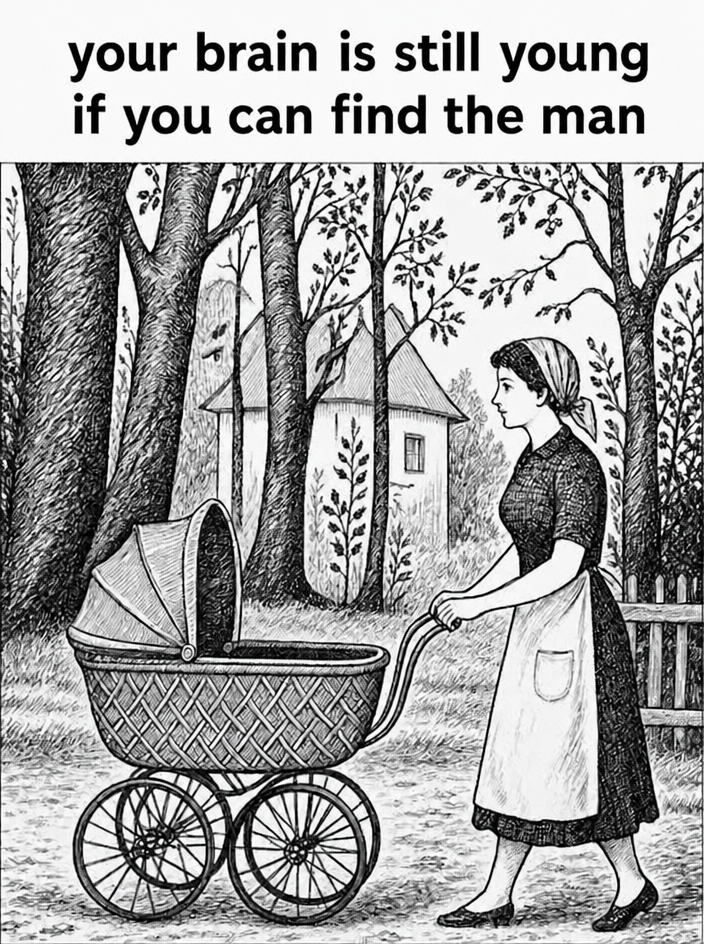
The picture shows a woman pushing a baby carriage beneath the trees. Around them, foliage and shaded areas complete the setting. Nothing in that description sounds particularly puzzling—until you learn that a man’s face is supposedly concealed within the artwork.
Now the challenge changes.
Instead of simply enjoying the scene, you have another task: examine the illustration and decide where the hidden face might be.
Before moving on to the suggestions below, give yourself a moment to look without guidance. Which details catch your attention? Are you searching for a small person, a large profile, or a face assembled from several background shapes?
You do not need to race. The enjoyment comes from discovering a second way to read the picture.
Start With the Scene, Then Change Your Approach
Begin by taking in the illustration as a whole. Notice the woman, the carriage, and the surrounding park.
Then deliberately move your attention away from the central action.
For this challenge, the person you are looking for is not described as another visitor walking along the path. The puzzle asks you to find facial features concealed within the scenery itself.
That distinction matters when deciding how to search.
If you keep looking for a complete figure with a coat, arms, and legs, you may overlook a much larger arrangement suggesting only a head. Try treating the illustration as a collection of outlines, light patches, and darker shapes rather than a realistic outdoor scene.
Where could an unexpected silhouette begin?
Three Ways to Explore the Picture
There is no need to inspect every leaf individually. Instead, try changing one part of your viewing method at a time.
1. Search at Different Scales
First, look for a face that might occupy a small section of the illustration.
Next, step back or reduce the picture on your screen. Consider whether a larger portion of the landscape could create a single head.
Do not assume the hidden subject must be the same size as the woman. Let the possible proportions change as you examine the artwork.
A useful question is: “What would I notice if I stopped looking for a tiny detail?”
2. Follow Outlines Rather Than Objects
Choose a line near the trees and trace it with your eyes.
Ignore what the line is supposed to represent for a moment. Could its shape suggest a forehead, the bridge of a nose, or the curve beneath a chin?
You are not trying to turn every branch into a feature. You are checking whether several neighboring details form a coherent outline.
If a possible face requires too much imagination, leave it and explore another area.
3. Examine the Spaces Between Shapes
Try looking at the lighter areas between the darker marks.
Instead of concentrating only on branches or foliage, examine the spaces they surround. Does an open patch have an interesting boundary? Could the edge of a shadow contribute to a larger profile?
Move slowly through the illustration, comparing one possibility with another.
The goal is not to identify an isolated eye-like dot. It is to find a combination that makes sense together.
Gentle Hints Without Giving Away an Unverified Answer
If you would prefer a little direction, work through these prompts separately:
- Look away from the woman and carriage.
- Consider whether the face could be much larger than expected.
- Search for an outer head shape before looking for smaller features.
- Compare neighboring light and dark areas.
- Return to the full picture whenever you become absorbed in one tiny section.
Avoid deciding too early that a particular mark must be the answer.
Once you have a candidate, check the surrounding details. Can you explain where the face begins and ends? Does the arrangement still look convincing when you look away and return?
A clear discovery should be easier to describe than a vague impression.
Make It a Shared Challenge
This picture can also become a simple activity for two people.
Let each person examine it independently before discussing possible answers. One viewer might begin with the edges, while the other studies the central background.
When you compare observations, describe the location using landmarks rather than saying, “It’s right there.”
For example, identify which tree or section of shading you mean, then explain how the surrounding lines might form a face. This makes it easier to compare interpretations without immediately agreeing with the first suggestion.
You can also take turns offering one hint at a time. Keep the final explanation separate so that anyone who still wants to search can continue.
What If You Still Cannot See It?
You do not have to force an answer.
Check whether the picture you are viewing is complete and clear enough to examine. If you have access to a larger version, compare it with the smaller one.
Then take a break if the search stops being enjoyable.
A puzzle does not become more worthwhile because you spend longer staring at it. Coming back later, asking someone else for a clue, or choosing to see the solution are all reasonable ways to finish the activity.
There is no need to turn a relaxed visual challenge into a competition.
About the Solution
The exact location of the hidden face cannot be confirmed here because the original illustration was not included with the supplied text.
Rather than invent a landmark or repeat a vague “reveal,” the honest approach is to leave the solution unverified. A proper answer would identify a precise area of the picture and explain which visible lines create the facial features.
Until that can be checked, treat the suggestions above as search techniques—not confirmation of a particular answer.
Enjoy the Search, Not Just the Reveal
The appeal of this park puzzle lies in looking at an ordinary scene with a different purpose.
For a moment, the background becomes the main attraction. Trees are no longer just trees; their outlines become possibilities to examine.
Whether you find a convincing face immediately or need a few hints, let the illustration remain what it is meant to be: a small, enjoyable mystery, with room to pause, compare ideas, and look again.